
We lose many things when a marriage ends. I didn’t expect bedtime routines to be one of them.
When I was married, I was home every night during the children evening routines. Their bath, the dinner, brushing teeth, bedtime stories. The aim of the routine is to overcome the children’s tendency to stay up and play, to get them to bed so they get enough sleep. Every night, as I turn off the lights and close their bedroom door, a sigh of relief and a sense of achievement follow.
But something else also stirred, as I paused for a moment after closing the door, and wondered what that sensation I was experiencing was. I knew it was more than the success of getting them to bed on time. Rarely would I be thinking, “how do I make this more efficient at getting them to bed?” There was something else I could not identify.
When marriage ends, as with all separated parents I have to grapple with the fact I could not be in the children’s bedtime routines every night anymore. I missed my children on those nights when the children’s beds at my house were empty, and their teddy bears on the beds stared at me, reminding me of the warmth I wish was there but was not.
Over time, my longing and perspective began to change, as I started to adjust and see the separation through the children’s eyes. They still needed their routine, they needed someone they love to share it with, and they continued to have that every night with a parent and family in different households.
The change in perspective also came from my realisation that all parents, separated or not, at some stage reach the point where their children’s bedtime routine is no longer a part of the life they share. All children grow and eventually have their own lives. I was just grieving something all parents have to let go of eventually.
Realising that children’s bedtime routines eventually disappears for all of us made it matter even more to me, not less. It made me wonder why something so ordinary matters so much in the first place.
As a parent, I can think of the things I do as tasks. Getting the children to bed is a task. To do it, I need to solve problems: reduce arguments, side-step delays, create routines that take less time. I need to be competent at getting two boys to stick to schedules. The more skillful I am, the more success I have. When I succeed, I am rewarded with more time in the evening to relax or complete other tasks.
All that is useful, and important. But it doesn’t explain why I miss it, why I wish for it and look forward to it, why something is missing when it doesn’t happen. Something is in the bedtime experience that is much more than what it objectively looks like.
There are encounters, where we are present to one another. There is participation, where we enter each other’s lives and live those lives together. There is relationship-building, as parent and child, with trust, intimacy and care. We are embodied, with tired bodies, hugs, irritation, laughter, the kiss goodnight. There is meaning, where we interpret what is happening, we create memories, form identity, create stories, build hope. All that we do have consequences, that tonight came from yesterday and changes tomorrow. We practice, do it again and again, through actual actions rather than just thinking and talking about the routine. And through all of this there is formation, they are becoming who they are, and so am I.
All of it is dynamic, that makes human experiences human. It takes place in time. It involves dependence and vulnerability. We are always uncertain about what will actually happen. Every night is particular and irreversible. And eventually it ends.
I began to map this out for myself.
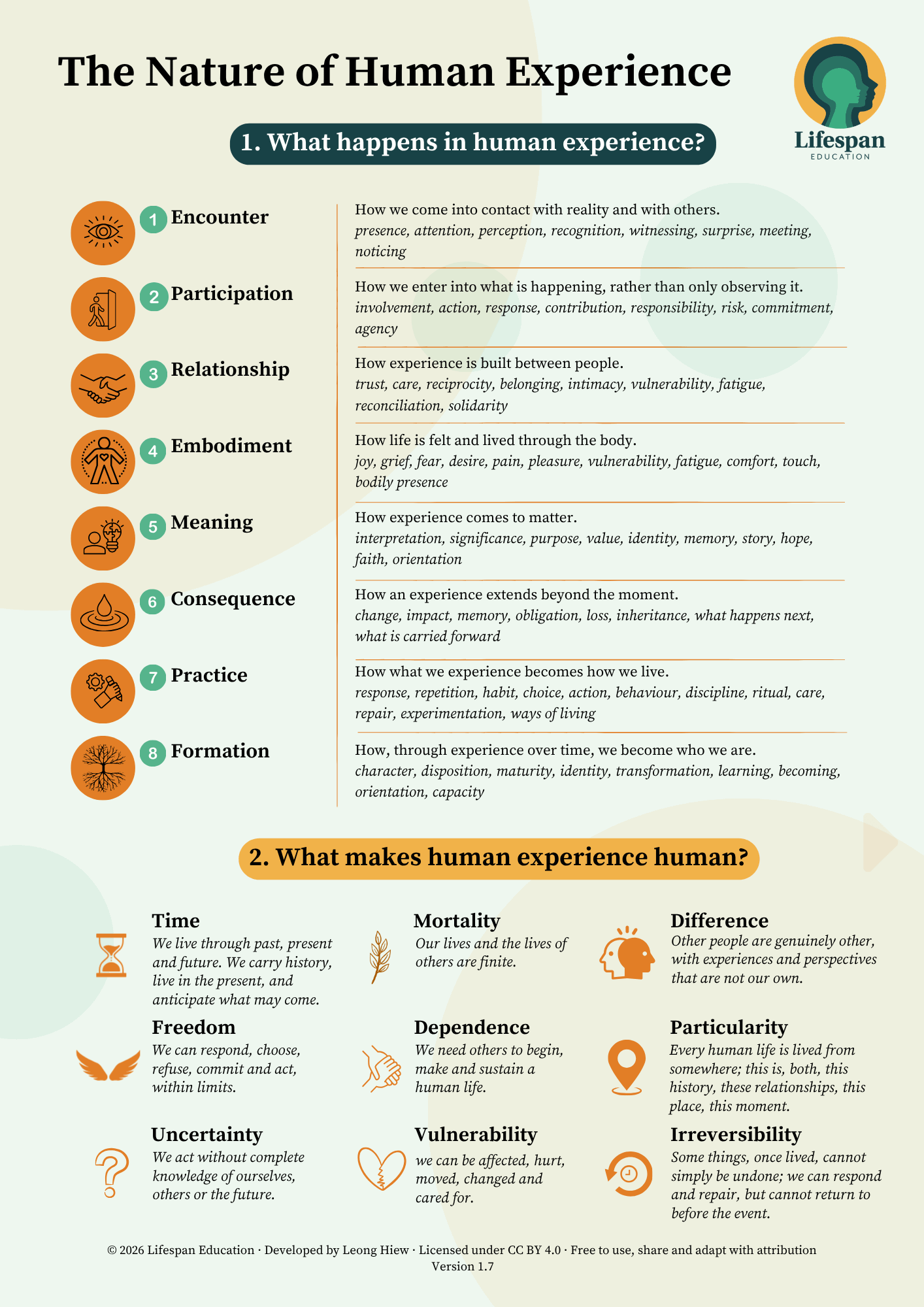
Image 1 The Nature of Human Experience: A map of core human experience that helps me think about the richness of my daily experiences, and helps me think appreciate my interactions with other people, even when the experiences and interactions are difficult.
Marriage separation also left me with stretches of time to myself without my children. Some of that time went into parenting in less visible ways—laundry, meal planning, reading school updates, fixing our home, finding places for us to go. But there was still time left.
I began exploring the online world my children were growing into. I had begun my career in technology, but years focused on work in aged care services and then fatherhood meant that the Internet I returned to was very different from the one I remembered.
And I began noticing how easy the digital world makes us see some things, and makes invisible other things. That world put spotlights on views, likes, followers, rankings, transformations, entertainment, productivity, wealth and accomplishments. Views can be counted. Transformation can be shown in a before-and-after reel. Wealth can be photographed. Entertainment can reach large audiences and across borders.
None of these things is necessarily inherently bad. They speak to our achievements. I know the satisfaction of hard work that leads to achieving something difficult.
But I kept thinking about bedtime routines. How does that fit in this picture of human life?
Family evenings would make terrible content. The routines are boring and repetitive. Nothing spectacular happens. Nobody wins. There are no big revelations. These things are difficult to count, commercialise or broadcast. From the outside, almost nothing is happening.
And yet I know how much the evenings matter, especially when they are not there.
Perhaps that is the problem. Are we mistaking the things that are easiest to see for the things that matter most?
Scottie Scheffler, golfer and multiple major championship winner, when he reached the pinnacle of his sport, openly wondered “what’s the point?” in a press conference. He did not dismiss his achievements. Winning brought tears to his eyes, and he described the sense of accomplishment from living out his dreams as special. But after finally winning the tournament that he had worked towards his whole life, the celebration lasted a few minutes. Then came the ordinary question: what are we going to eat for dinner? Life went on. As he said, "This is not a fulfilling life. It's fulfilling from the sense of accomplishment, but it's not fulfilling from a sense of the deepest places of your heart."
Emma Chamberlain, one of the largest creators to emerge from YouTube, has spoken about a related problem. After years of documenting and posting about her life online, she wondered: “Am I even living for real life anymore? Yeah, I’m literally just doing things to film it.” She described having to reprioritise: “you have to learn how to live first, document second.” When almost anything we do can potentially go viral or build an audience, she said that it can be difficult to remember that “some things still have to be for me.”
Other large content creators have expressed similar sentiments. YouTuber Ali Abdaal has reflected on how a podcast he originally enjoyed gradually shifted “from the joy of conversation to the strategy of audience engagement, retention and growth”, until it became another platform producing content “for the sake of algorithms and audiences, for growth and monetisation.” Lilly Singh, another well-known content creator, described in an interview how views and subscriber counts became her definition of success: “It doesn’t matter what I’m making… you have to get those views.” Eventually she realised: “Numbers never fulfill you because there’s always a higher number.”
To me, perhaps the clearest person to articulate the sentiment is Lea Salonga. After a distinguished career on Broadway and musical theatre, she was asked in an interview what she would tell young people who wanted to follow her path. Her answer was, “Be a good human first and then a good artist second.” She explained that being a good artist is “entirely contingent, connected, integrated into the kind of person that you are.”
Perhaps we have become very good at recognising and celebrating the things that are visible from the outside — the artist, the winner, the creator, the success story—while ignoring the other things in human life that matters to us.
What are those things?
Our sense of belonging, being a part of our family and community, matters to us. We want to care for others and experience others caring for us. It matters to us that we contribute ie. to make a difference to something outside of ourselves. We value being curious and making discoveries. We want to express ourselves, to give form to what is inside us. Our play is important to us, to enjoy interaction with each other that doesn’t need outcomes. We want to experience beauty and wonder, to be moved by something we cannot describe. All of this can come together to form a sense of purpose, to give direction to our lives.
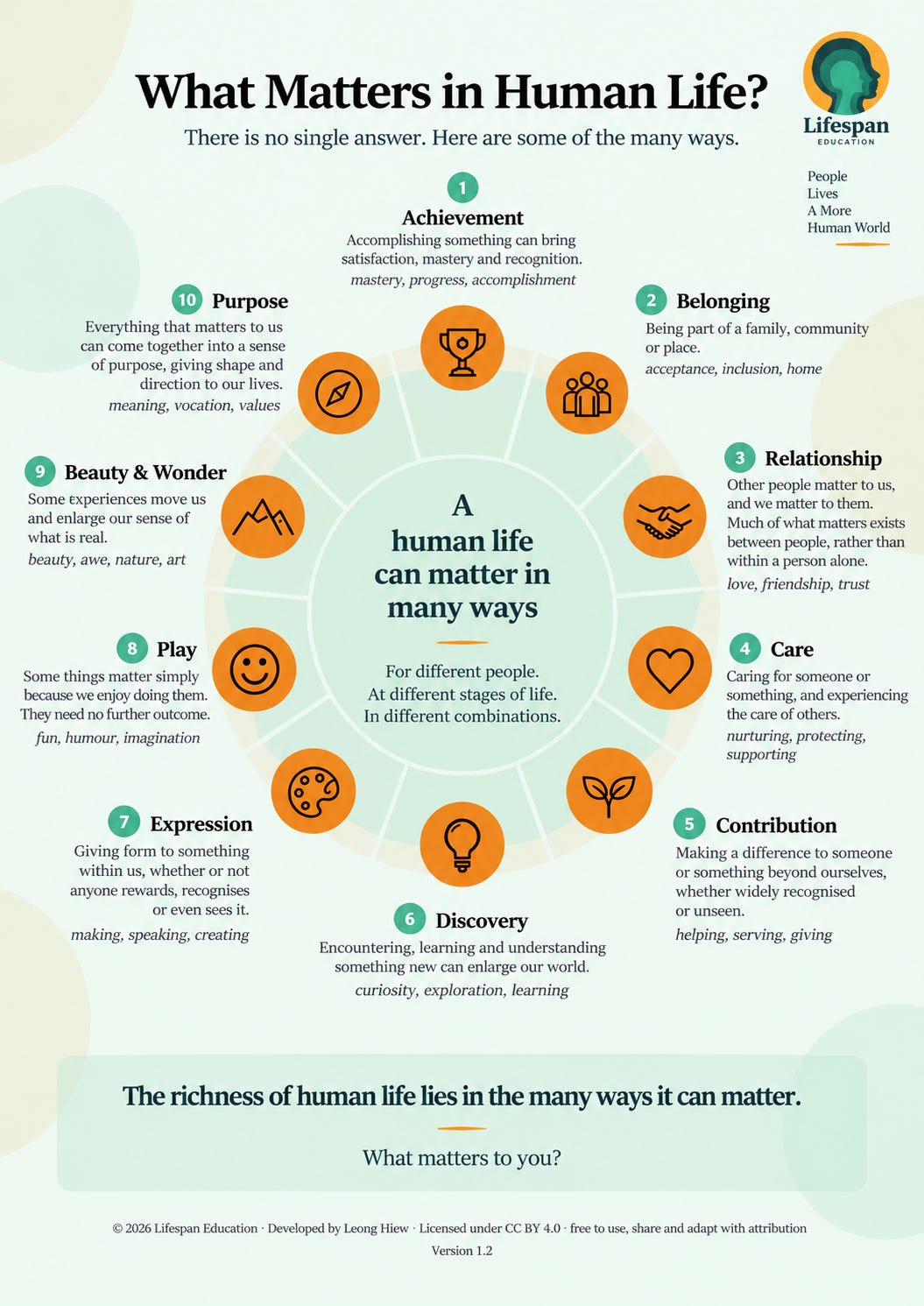
Image 2 What Matters in Human Life: A map of different things that are important in human life, that makes me appreciate the richness of what we pursue, especially those things that are less visible, less talked about, but still matters to us just as much.
I look at bedtime very differently to the way I did many years ago.
The children and I go through what we need to to get them to bed on time. The evening routine is the same, but every night countless unexpected things happen that make each night unique. We get there eventually.
As I sit beside their beds and tuck them in. I kiss them on their foreheads, and tell them I love them always.
I turn off the lights, close the doors. For a moment, as the door knob clicks, I pause.
And smile.
I am not a parent, but I understand the feeling.